
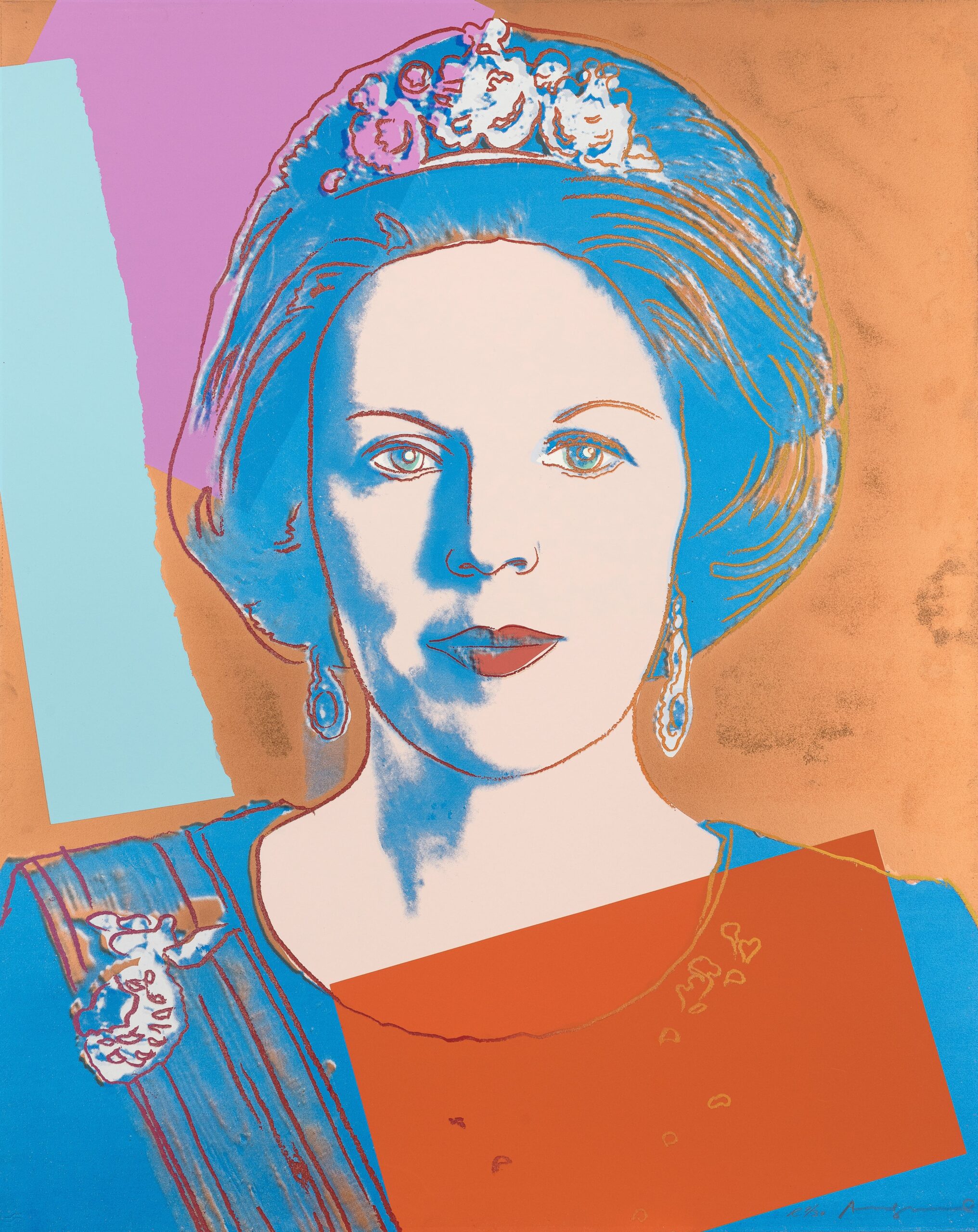
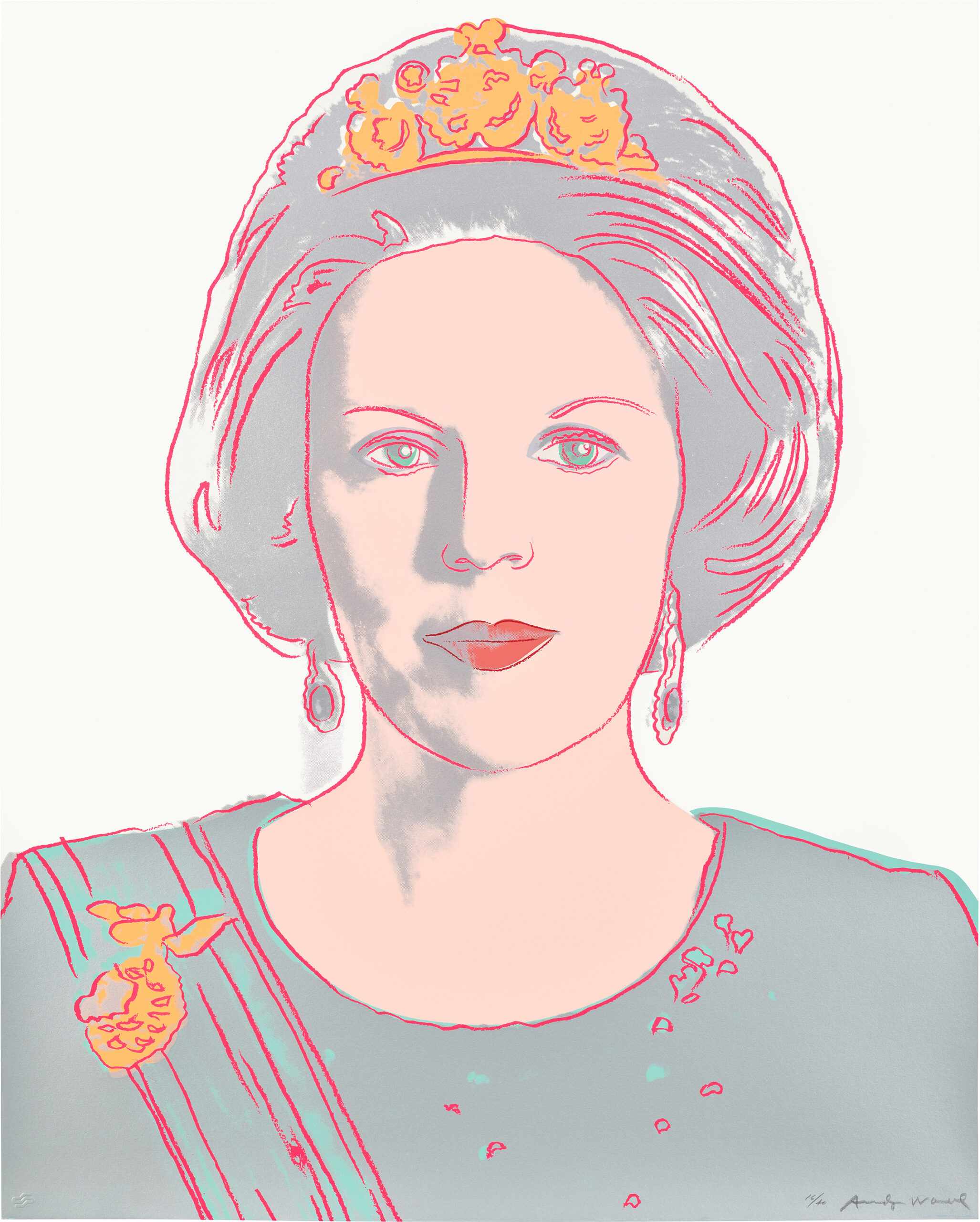
 Andy Warhol, Queen Beatrix of the Netherlands, lithograph, 1984
 Andy Warhol, born Andrew Warhola on 6 August 1928 in Pittsburgh to Eastern European immigrant parents, became a central figure in the development of Pop Art and is widely recognized as one of the most influential artists of the twentieth century. He studied painting and design at the Carnegie Institute of Technology (now Carnegie Mellon University) from 1945 to 1949, then relocated to New York with fellow artist Philip Pearlstein.
After relocating to New York, Warhol began his career as a commercial illustrator and rapidly earned acclaim for his distinctive style. With the support of gallerist Alexander Iolas, he held his first solo exhibition in 1952. By the early 1960s, Warhol transitioned to fine art, producing iconic works such as Campbell’s Soup Cans and the Marilyn Diptych. These works simultaneously celebrated and critically examined consumer culture and celebrity in modern society. Warhol’s studio, The Factory, turned into a renowned gathering place for artists, musicians, actors, and intellectuals.
At The Factory, he expanded his practice beyond painting by producing experimental films such as Chelsea Girls and organizing multimedia events like the Exploding Plastic Inevitable, which integrated visual art with music and performance. Warhol’s impact expanded into publishing and music. He managed The Velvet Underground and founded Interview Magazine, additionally establishing his standing as a key cultural figure. His writings, including The Philosophy of Andy Warhol and Popism: The Warhol Sixties, provide insight into his ideas and the era he helped define.
In 1968, Warhol survived a near-fatal shooting, an event that profoundly affected him but did not impede his prolific artistic output. He continued to work until his death in 1987. Today, Warhol is recognized as a cultural figure who fundamentally transformed the relationship between art and mass culture. His legacy lasts through major museum collections, such as The Andy Warhol Museum in Pittsburgh, and through his ongoing influence on contemporary art and visual culture.
Selected artworks
Andy Warhol
Queen Beatrix of the Netherlands, Screenprint on Lenox Museum Board
1984 , 100 × 80 cm
Andy Warhol
Queen Beatrix of the Netherlands, Screenprint on Lenox Museum Board
1984 , 100 × 80 cm
Portfolio of sixteen screenprints on Lenox Museum Board with diamond dust, edition of 30, with the printer’s blindstamp of Rupert Jasen Smith, New York. Published by George C.P. Mulder, Amsterdam.
Registered in the Andy Warhol Prints Catalogue Raisonné, Feldman & Schellmann, under reference number II.338.
"*" geeft vereiste velden aan
Andy Warhol
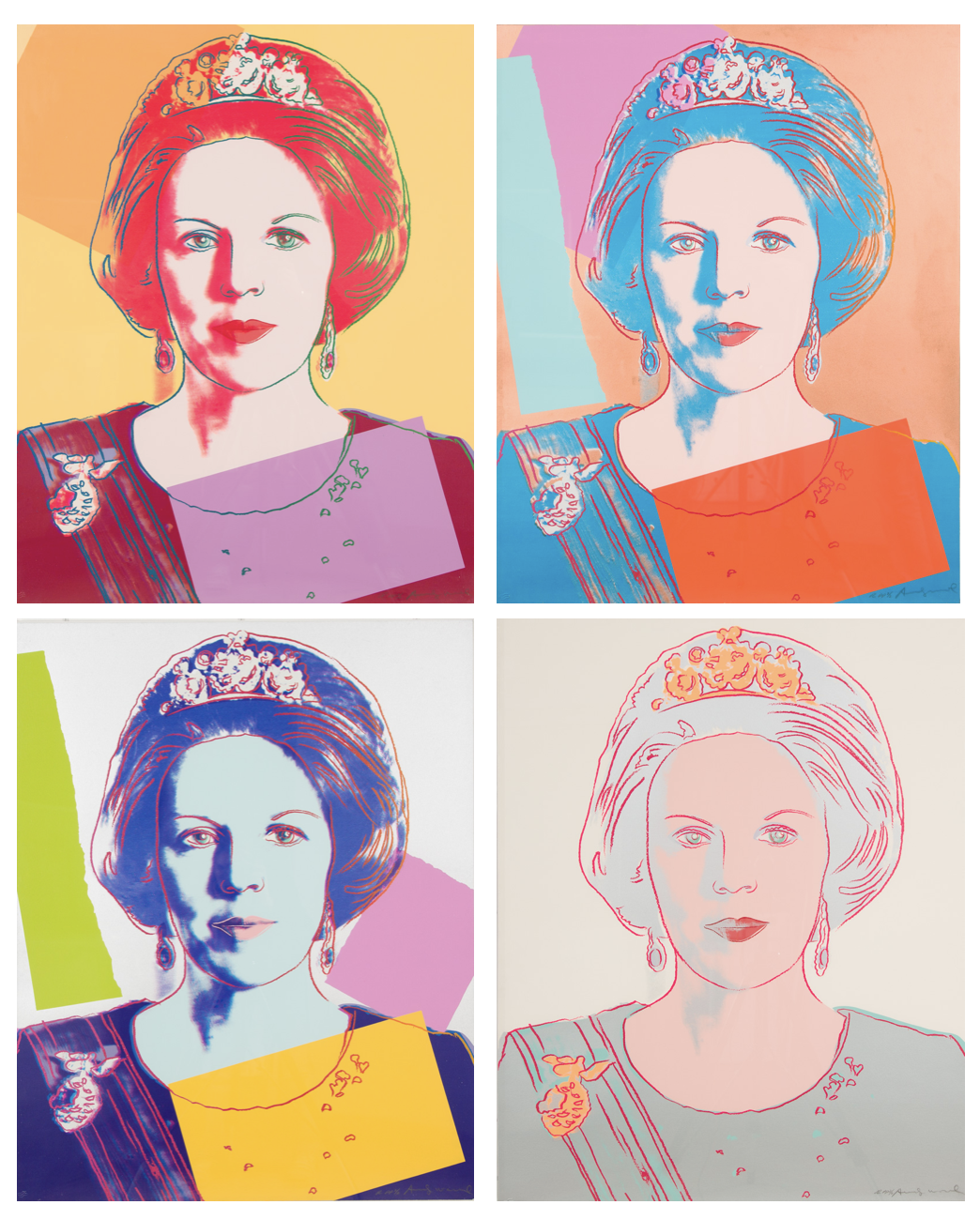
Queen Beatrix of the Netherlands (Complete Portfolio), Screenprint on Lenox Museum Board
1985 , 100 x 80 cm
Andy Warhol
Queen Beatrix of the Netherlands (Complete Portfolio), Screenprint on Lenox Museum Board
1985 , 100 x 80 cm
Portfolio of sixteen screenprints on Lenox Museum Board with diamond dust, edition of 30, with the printer’s blindstamp of Rupert Jasen Smith, New York. Published by George C.P. Mulder, Amsterdam. Signed and numbered in pencil 'RPP 2/2' (Printers Proof)
Registered in the Andy Warhol Prints Catalogue Raisonné, Feldman & Schellmann, under reference number II.338A-341A.
"*" geeft vereiste velden aan
Andy Warhol
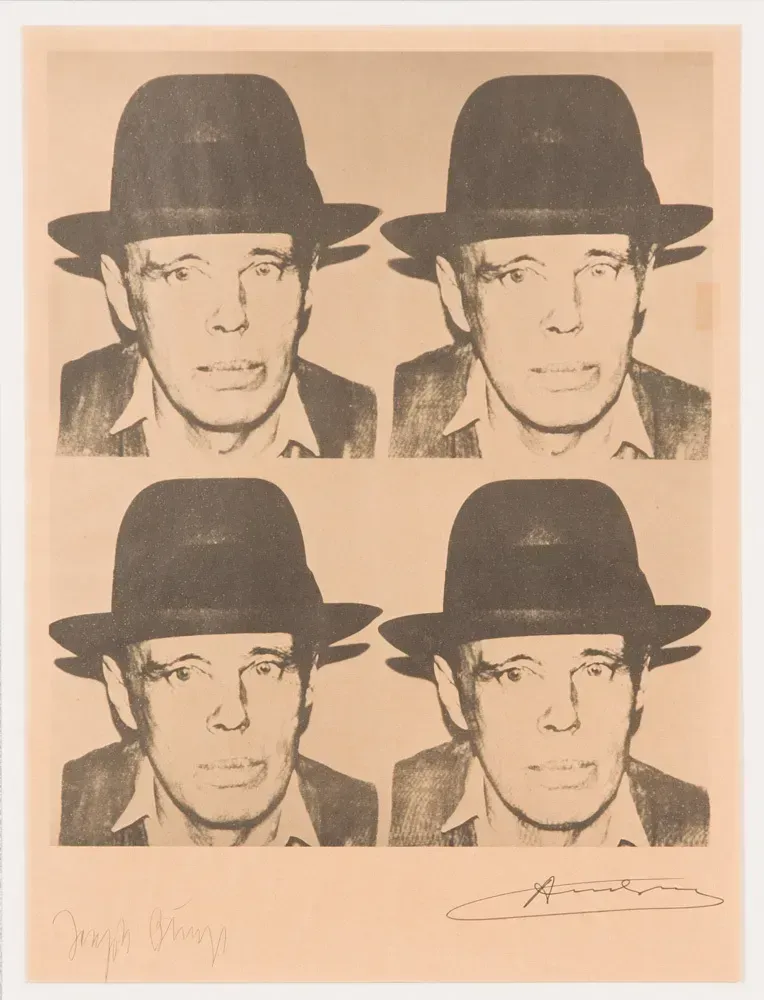
Joseph Beuys, Offset on paper
1980/83 , 33 x 27.5 cm
Andy Warhol
Joseph Beuys, Offset on paper
1980/83 , 33 x 27.5 cm
Hand-signed by Andy Warhol and Joseph Beuys
"*" geeft vereiste velden aan
Andy Warhol
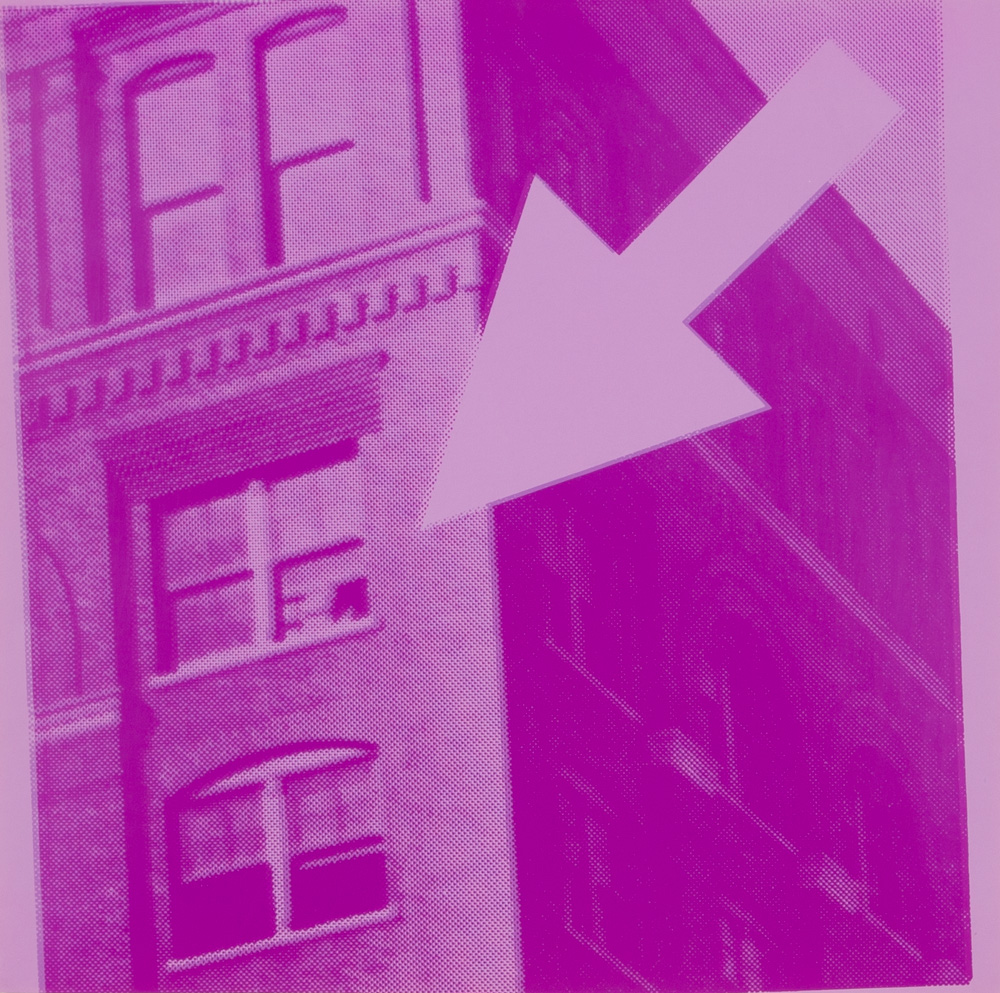
Flash November 22 (F. & S. II.39), screenprint
1968 , 53.3 x 53.3 cm
Andy Warhol
Flash November 22 (F. & S. II.39), screenprint
1968 , 53.3 x 53.3 cm
Portfolio of eleven screen prints, including colophon and teletype text on paper. The portfolio depicts the assassination of John F. Kennedy on November 22, 1963. Edition of 200.
Registered in the Andy Warhol Prints Catalogue Raisonné by Feldman & Schellmann, under reference number II.39.
"*" geeft vereiste velden aan
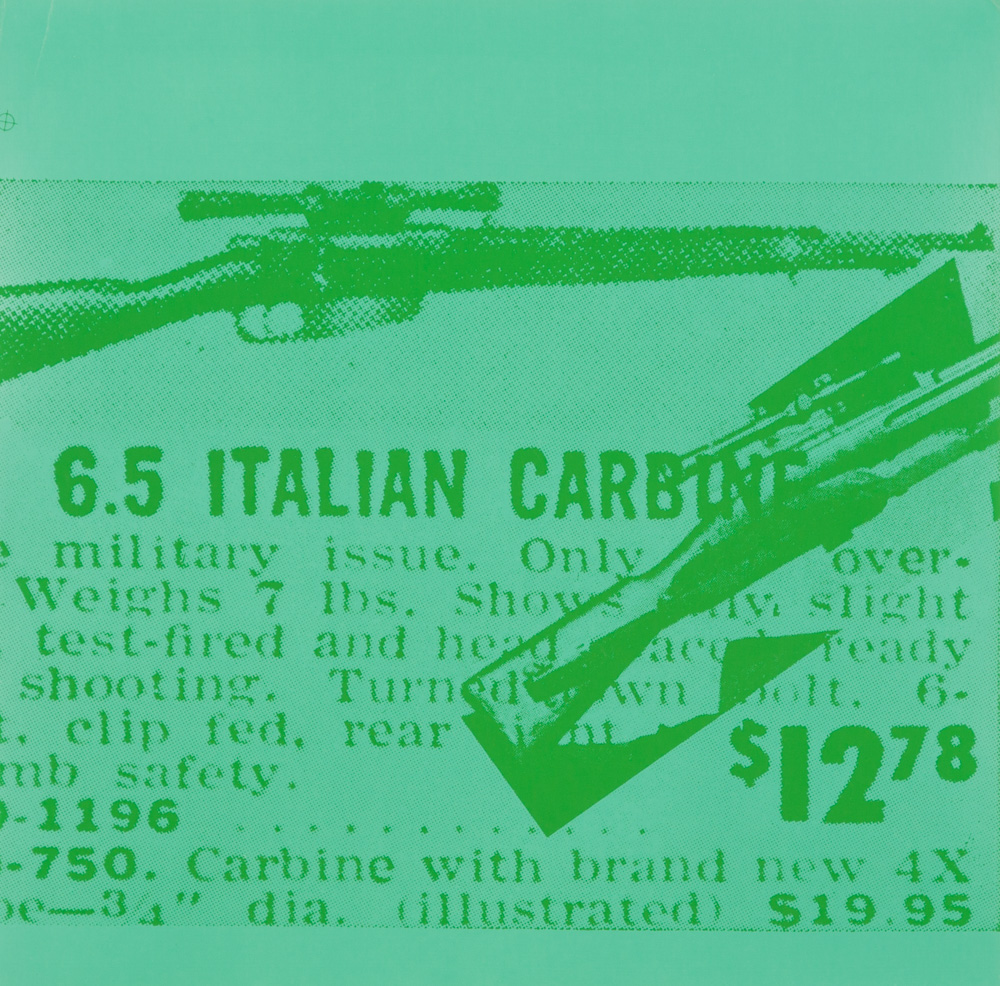
Andy Warhol
Flash November 22 (F. & S. II.37), Screenprint a
1968 , 53.3 x 53.3 cm
Andy Warhol
Flash November 22 (F. & S. II.37), Screenprint a
1968 , 53.3 x 53.3 cm
Portfolio of eleven screen prints, including colophon and teletype text on paper. The portfolio depicts the assassination of John F. Kennedy on November 22, 1963. Edition of 200.
Registered in the Andy Warhol Prints Catalogue Raisonné by Feldman & Schellmann, under reference number II.37.
"*" geeft vereiste velden aan
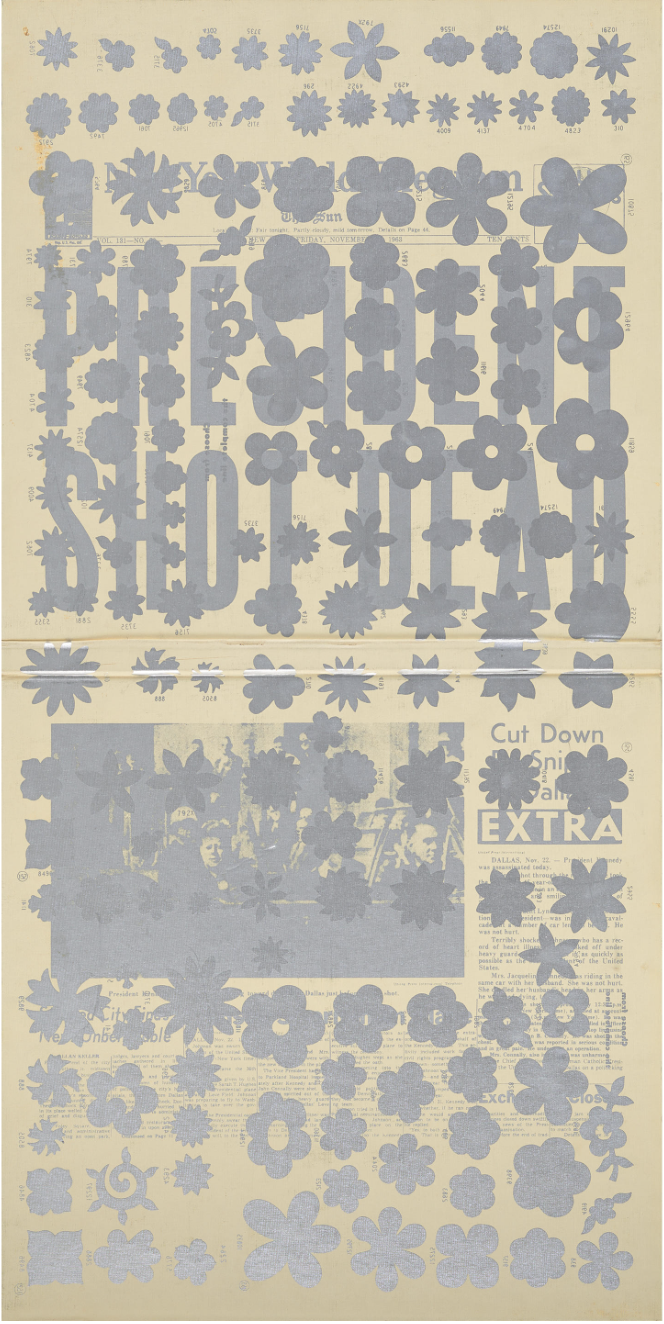
Andy Warhol
Cover of Flash November 22, Screenprint on cloth mounted on cardboard
1968 , 113.7 x 57 cm
Andy Warhol
Cover of Flash November 22, Screenprint on cloth mounted on cardboard
1968 , 113.7 x 57 cm
The cover of the portfolio depicts the assassination of John F. Kennedy on November 22, 1963. Edition of 200.
"*" geeft vereiste velden aan
Pictures
Request more information about Andy Warhol
EnquireInquiry Andy Warhol
"*" geeft vereiste velden aan
