
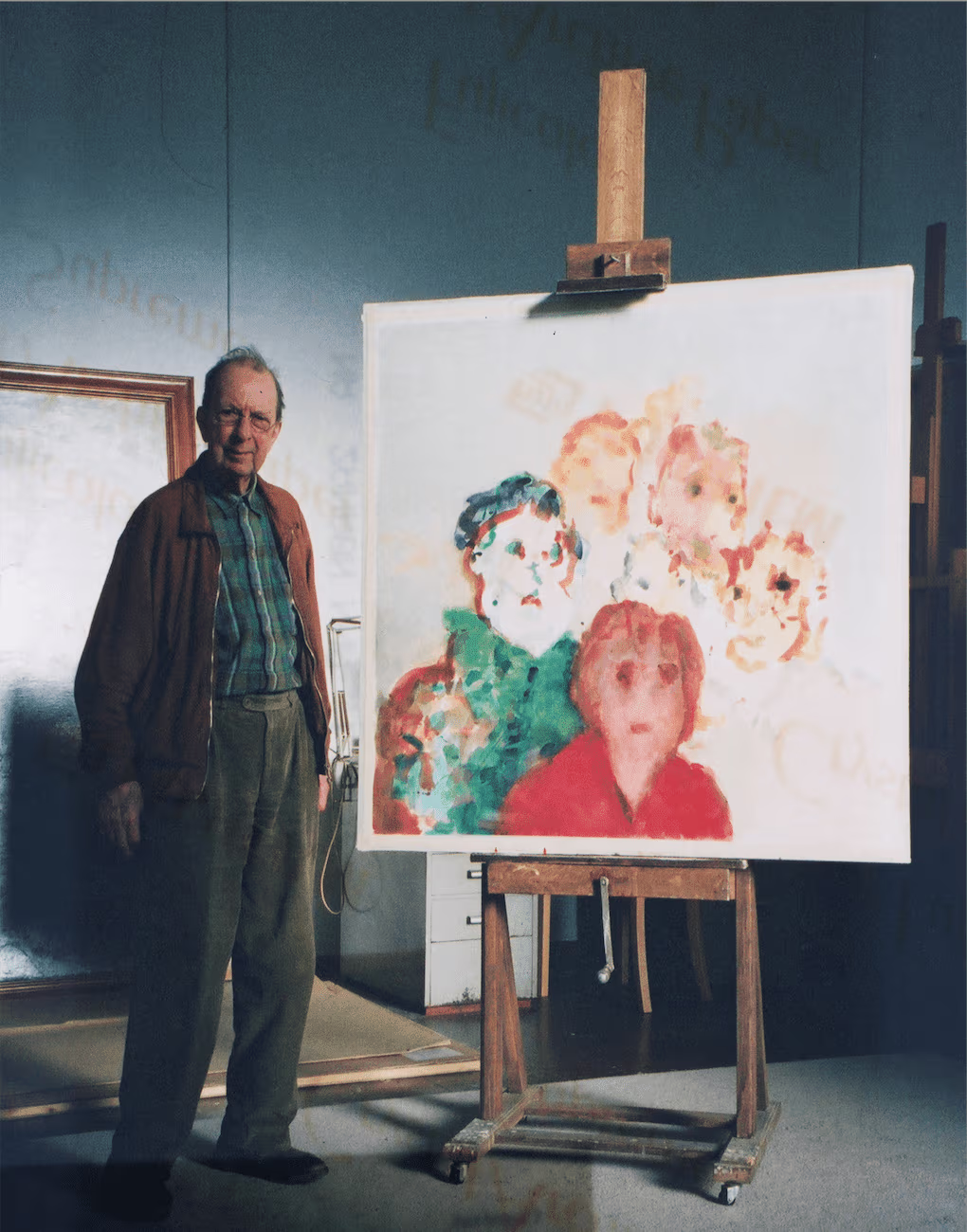
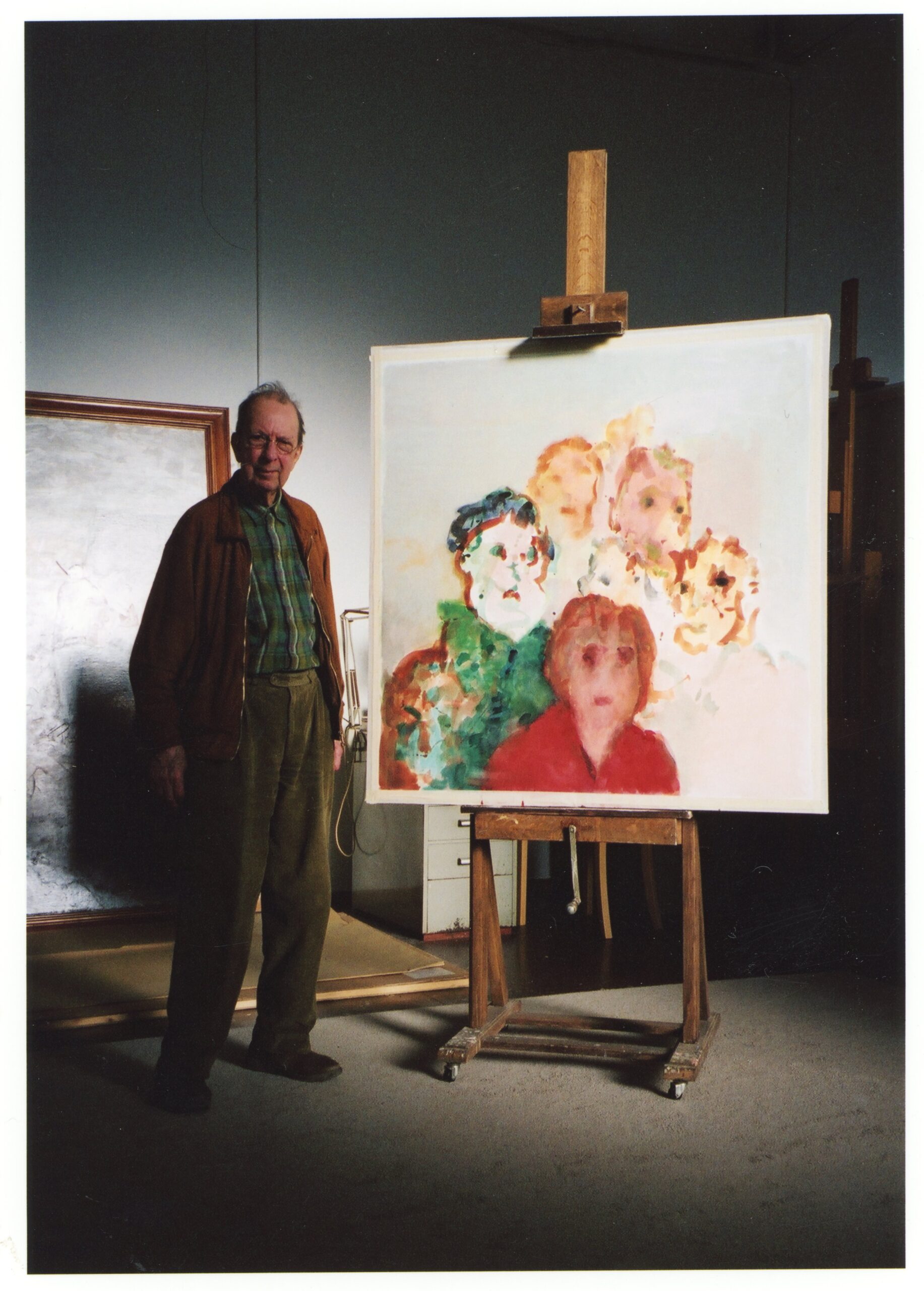
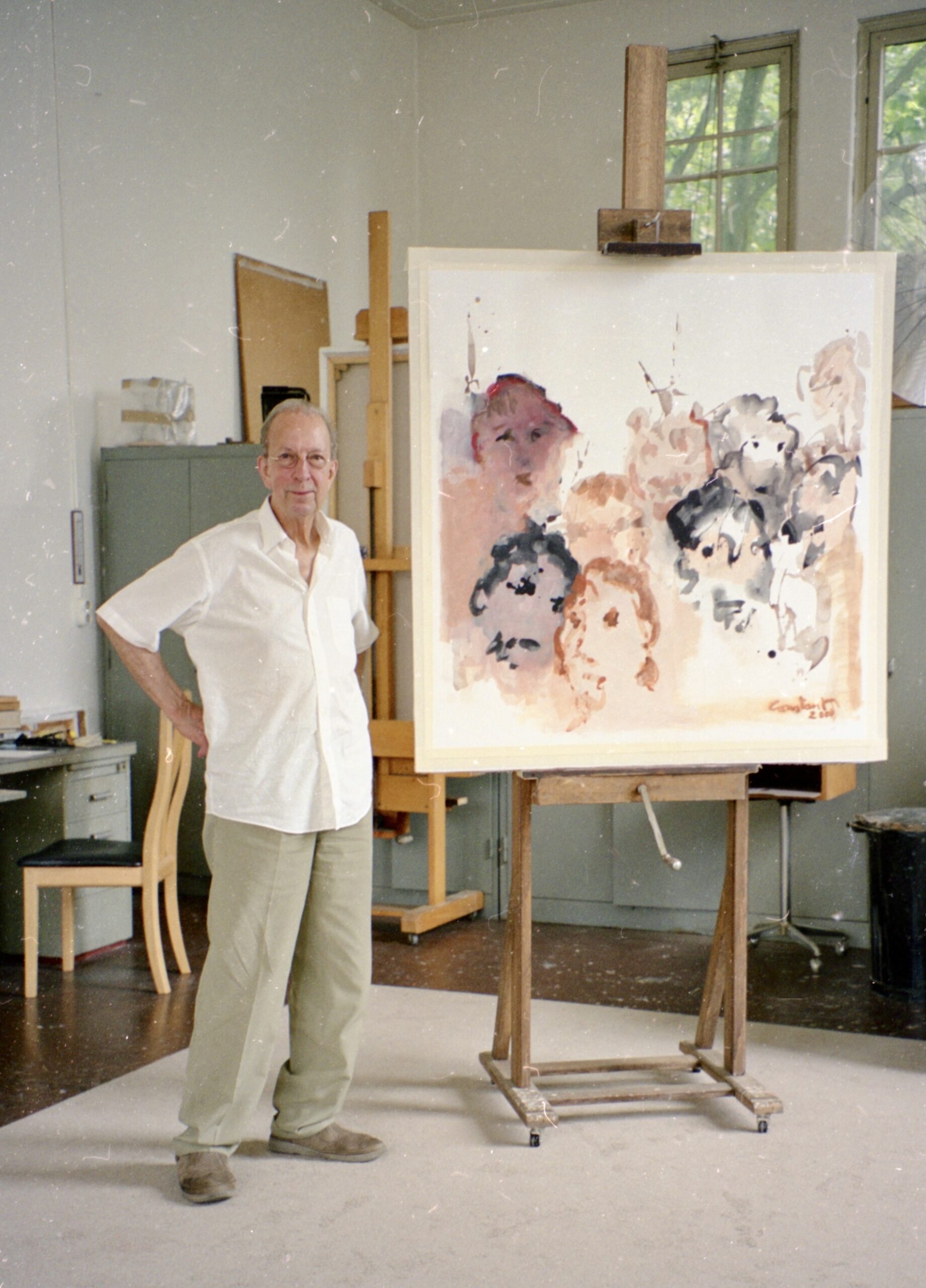
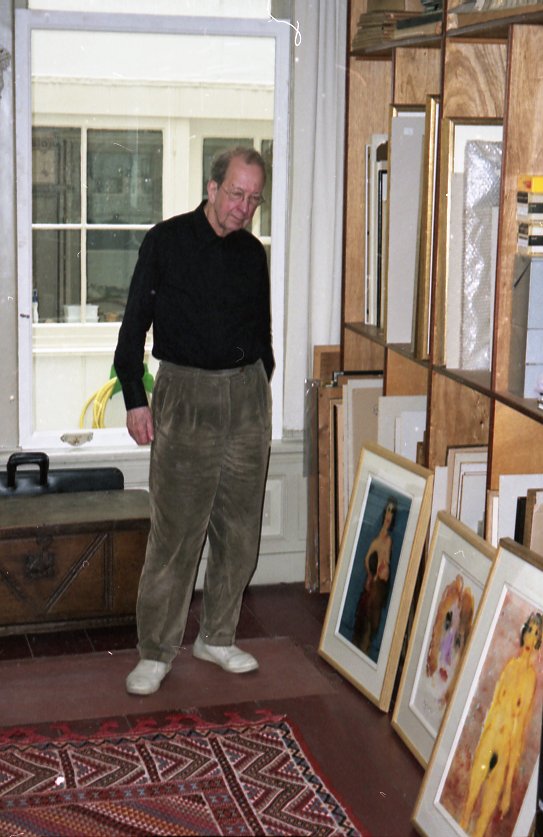
 Nico Delaive visiting Constant at studio Wittenburg in Amsterdam, 2002
 Constant Nieuwenhuys (1920–2005) was born in Amsterdam and showed artistic talent early on. As a child, he drew, sang, played guitar and violin, and painted his first work at sixteen. Creativity was always at the heart of his life and shaped his artistic journey.
In 1946, while living in Paris, Constant became friends with Danish artist Asger Jorn. Together, they challenged traditional abstract art and helped start the CoBrA movement in 1948. This international group brought together artists from Copenhagen, Brussels, and Amsterdam. CoBrA focused on spontaneity, experimentation, and working together, taking ideas from children’s drawings, mythology, primitive art, and raw imagination. Constant, along with artists like Karel Appel, Corneille, and Pierre Alechinsky, was central to shaping this important post-war movement.
CoBrA ended after big exhibitions in Amsterdam (1949) and Liège (1951), but its spirit of freedom and experimentation stayed with Constant. Around 1952, he slowly shifted from painting to explore wider social and artistic ideas. His travels and collaborations inspired him to develop new theories about art, society, and city life, which he later showed in his project New Babylon (1956–1969).
New Babylon was Constant’s vision of a future shaped by the idea of Homo Ludens, or the “playing human.” In this imagined world, work and society’s usual rules gave way to freedom, creativity, and ongoing change. Using large models, drawings, and constructions, Constant built a strong visual language for a world without borders, where imagination could thrive.
After the project ‘New Babylon’ Constant went back to painting. His style became softer and more expressive, influenced by classical artists like Rubens, Titian, and Cézanne, but he kept his experimental spirit.
Constant Nieuwenhuys died on August 1, 2005, in Utrecht. He is remembered as one of the most visionary artists of the twentieth century, always pushing the limits between art, architecture, and society.
Selected artworks
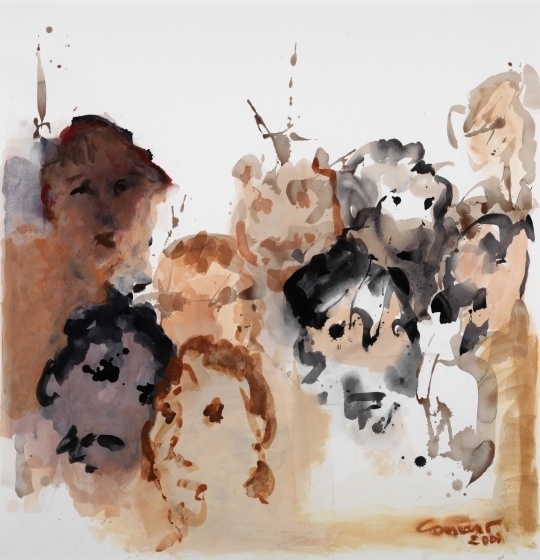
Constant Nieuwenhuijs
The Spectators, Watercolour on paper
2001 , 112.5 x 109 cm
Constant Nieuwenhuijs
The Spectators, Watercolour on paper
2001 , 112.5 x 109 cm
Signed and dated Constant 2001, bottom right sepia watercolor.
Registered in the online Catalogue Raisonné of the Constant Foundation under reference number CID 1711.
"*" geeft vereiste velden aan
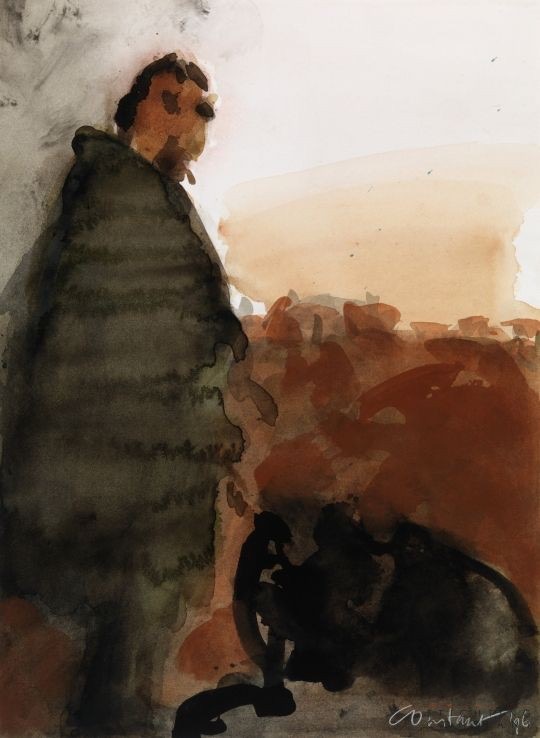
Constant Nieuwenhuijs
ZT/Man met beer, Watercolour on paper
1996 , 57.5 x 42.4 cm
Constant Nieuwenhuijs
ZT/Man met beer, Watercolour on paper
1996 , 57.5 x 42.4 cm
Registered in the online Catalogue Raisonné of the Constant Foundation under reference number CID 1732
"*" geeft vereiste velden aan
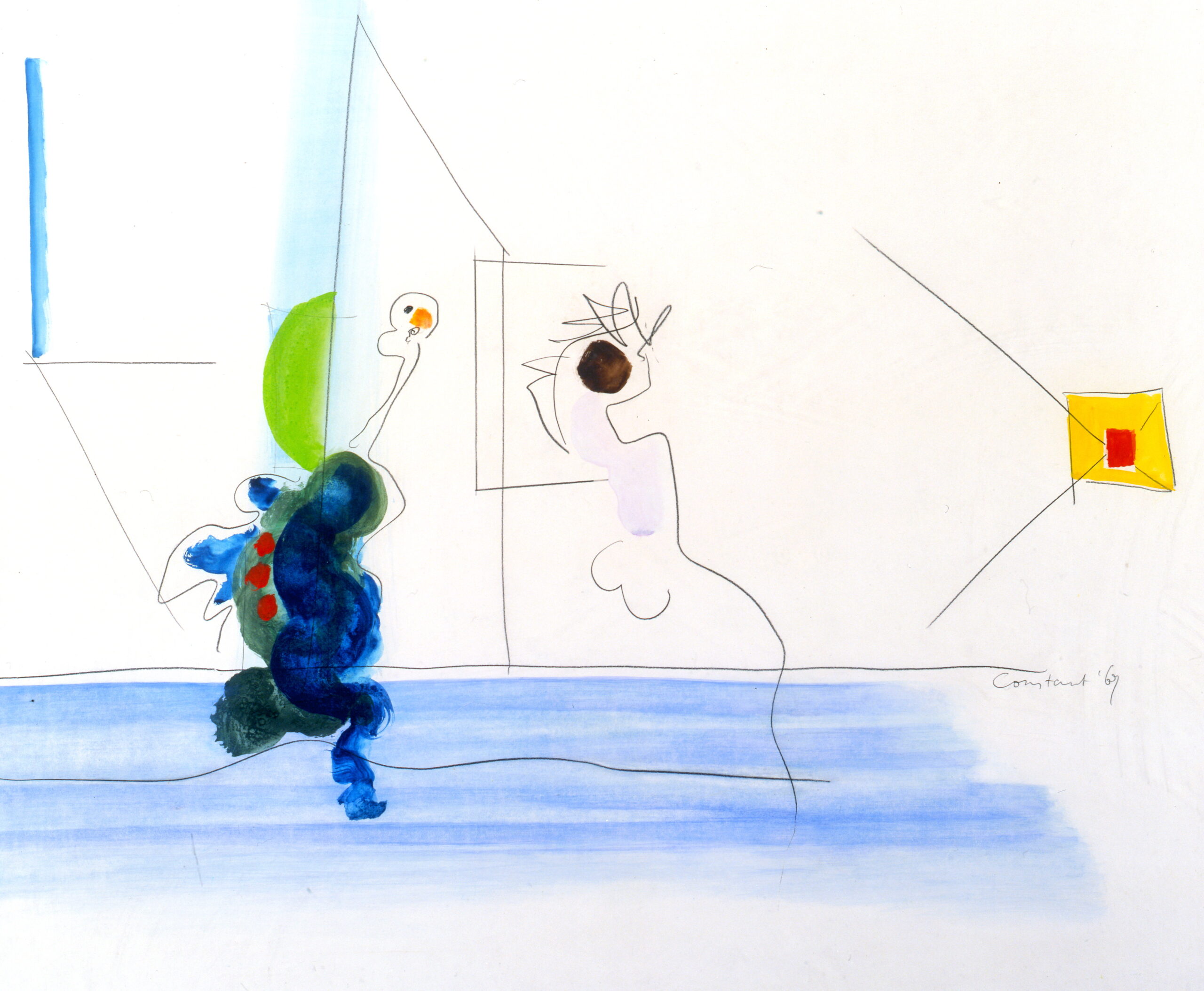
Constant Nieuwenhuijs
Homo Ludens (Playing Man), Watercolour on paper
1967 , 109 x 132 cm
Constant Nieuwenhuijs
Homo Ludens (Playing Man), Watercolour on paper
1967 , 109 x 132 cm
Signed and dated Constant '67, centre right in pencil
Registered in the online Catalogue Raisonné of the Constant Foundation under reference number CID 1708
"*" geeft vereiste velden aan
Nico Delaive met Constant for the first time in 1979 at Constant’s home on the Kromme Waal in the Netherlands. This meeting started a long partnership. Soon after, they travelled to Italy together, where Constant spent two months working and finding inspiration for pieces like L’Ultima Cena.
They created four editions together. The first, Plaisir et Tristesse de l’Amour: 3. Plaisir et tristesse de l’amour (1979), includes five colour etchings with text by Fanny Kelk. It was published in editions of 10 (numbered I–X) and 99 (numbered 1–99). The second, L’Ultima Cena (1980), had 70 copies. Next came a bronze sculpture called Mephisto, made in a small edition of six around 1980, and finally After Orpheus (2000).
Delaive still shares Constant’s story and his art with pride. He remembers their last conversation, just a few months before Constant died. “He never mentioned that he was sick,” says Delaive. “But he did tell me that everything was arranged. Then Corneille called to inform me of his passing in 2005.”
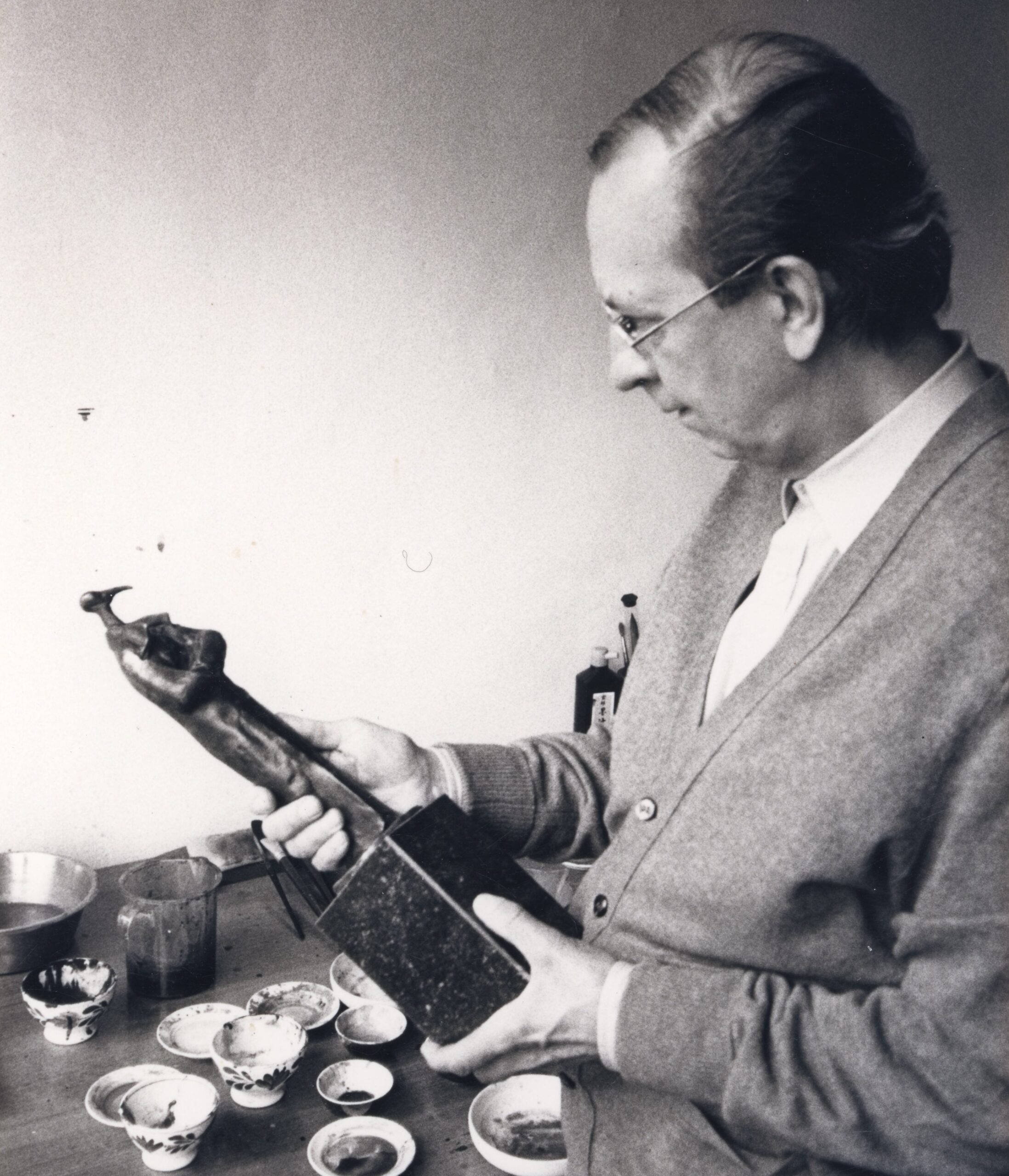 Constant in his studio in Amsterdam, reviewing the edition Mephisto, created together with Gallery Delaive, 1980.
Pictures
Request more information about Constant Nieuwenhuijs
EnquireInquiry Constant Nieuwenhuijs
"*" geeft vereiste velden aan
