
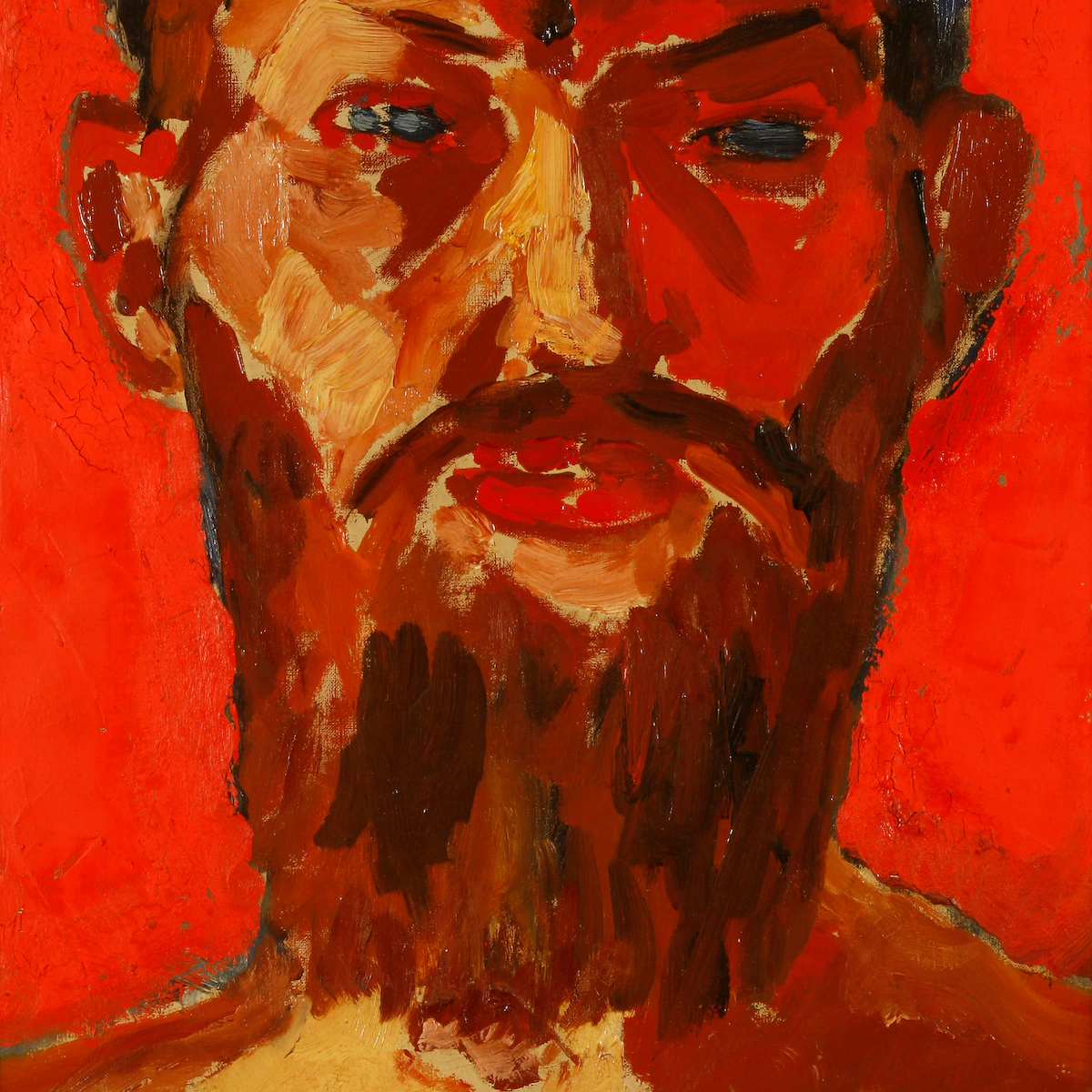
 Self Portrait Artwork by Kees van Dongen, 1909.
 Kees van Dongen played an important role in early 20th-century avant-garde art and helped start Fauvism. He became famous for his lively, expressive portraits of singers, socialites, and people from Paris nightlife, using bold colours and strong distortions to change the way portraits were made.
Born in Rotterdam on January 26, 1877, into a Dutch bourgeois family, he initially worked in the family brewery before pursuing art. After moving to Paris, he settled in Montmartre, where he became part of the bohemian scene and engaged with various avant-garde movements, ultimately developing his Fauvist style.
His work is characterized by intense, often unmodulated colours, elongated forms, and a focus on visual impact over psychological depth. He exhibited alongside artists such as Derain, Picasso, and Matisse, securing his place within the modernist movement.
Starting in the 1930s, van Dongen began painting portraits for wealthy people in Paris. He made his style a bit more polished but kept his unique use of colour. He continued this approach when he later moved to Monaco.
Even though there were some controversies later in his life, Kees van Dongen is still seen as one of the most important modern portrait artists. He is known for his bold colours and for changing the way portraits were painted.
Selected artworks
Kees van Dongen
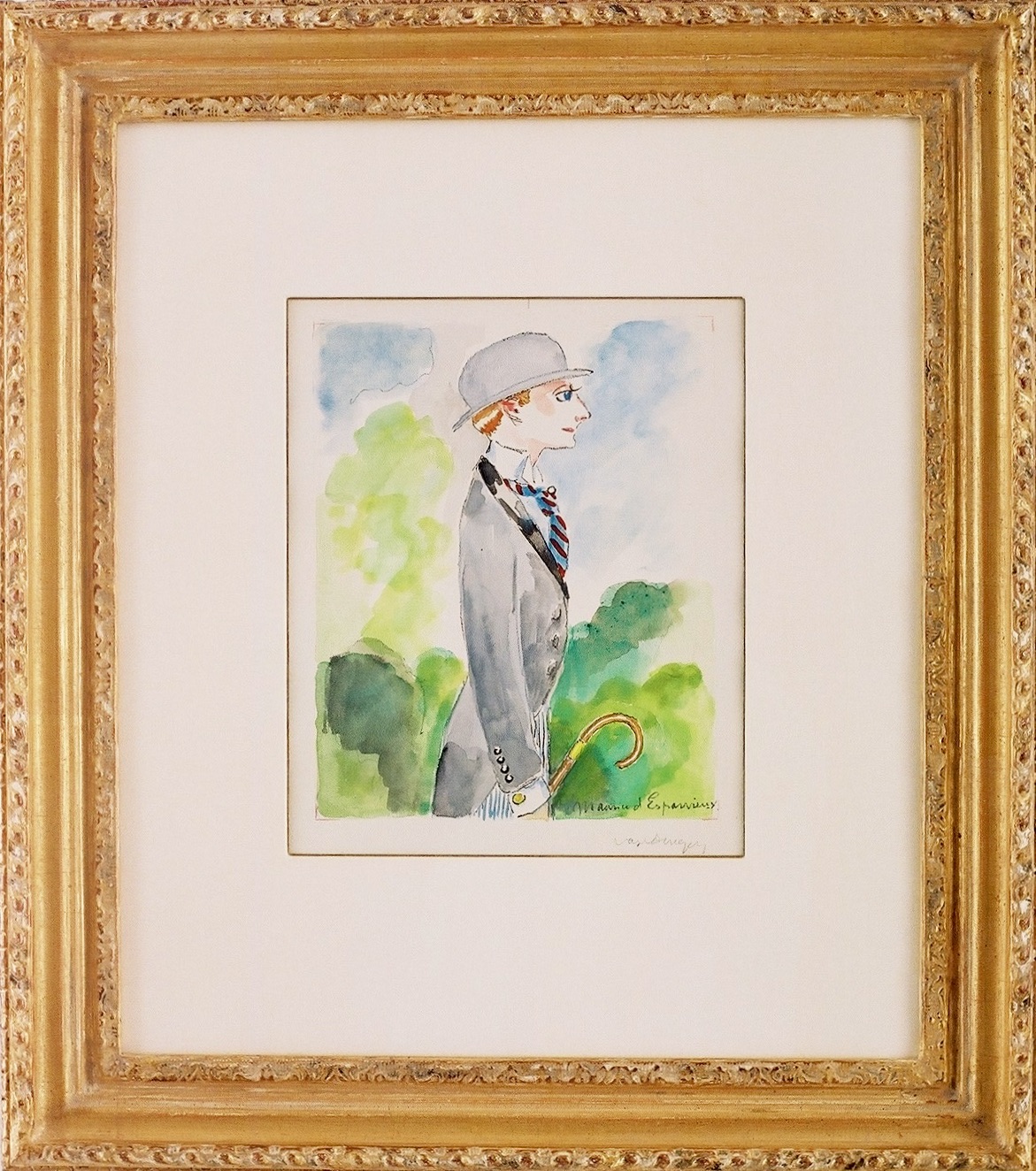
Maxime d’Esparrieux, Watercolor on lithograph
1949 , 25.2 x 20.6 cm
Kees van Dongen
Maxime d’Esparrieux, Watercolor on lithograph
1949 , 25.2 x 20.6 cm
Illustration for La Revolte des Anges d'Anatole France edition 1951.
This work is the original design for the book La Revolte des Anges.
"*" geeft vereiste velden aan
Request more information about Kees van Dongen
EnquireInquiry Kees van Dongen
"*" geeft vereiste velden aan
