
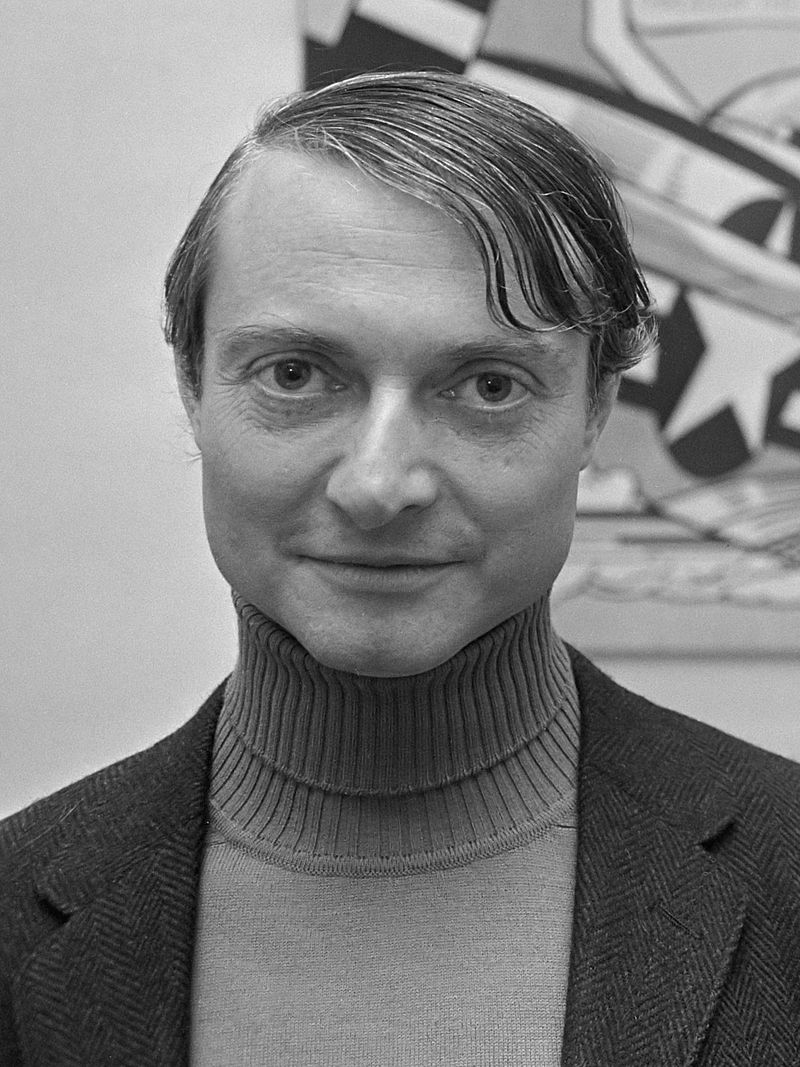
 Roy Lichtenstein in 1967 at the Stedelijk Museum, standing in front of one of his paintings. ©Ruud Hoff/ ANP
 Roy Lichtenstein was born in Manhattan in 1923. His father worked as a real estate agent and made it possible for Roy to attend private school, although art was not part of the curriculum. Still, Lichtenstein became interested in art on his own and eventually studied at the art school at Ohio State University.
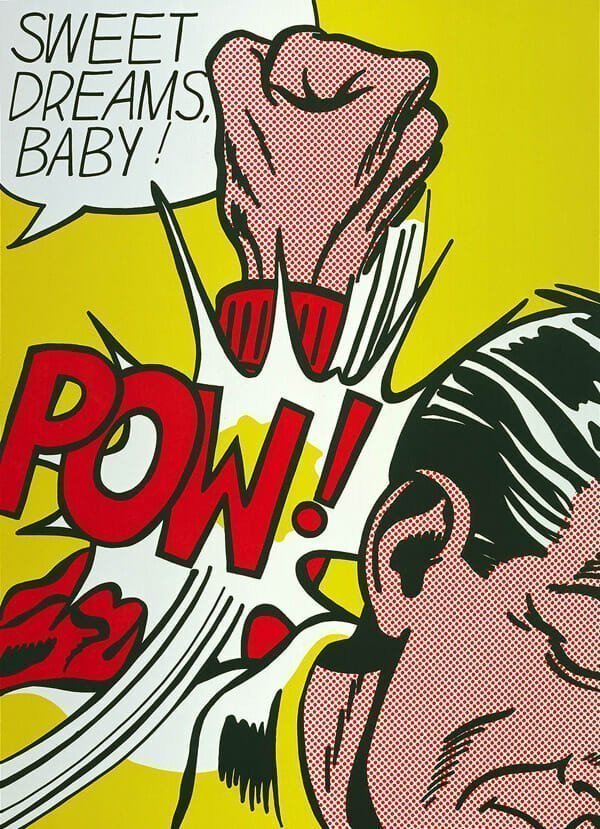
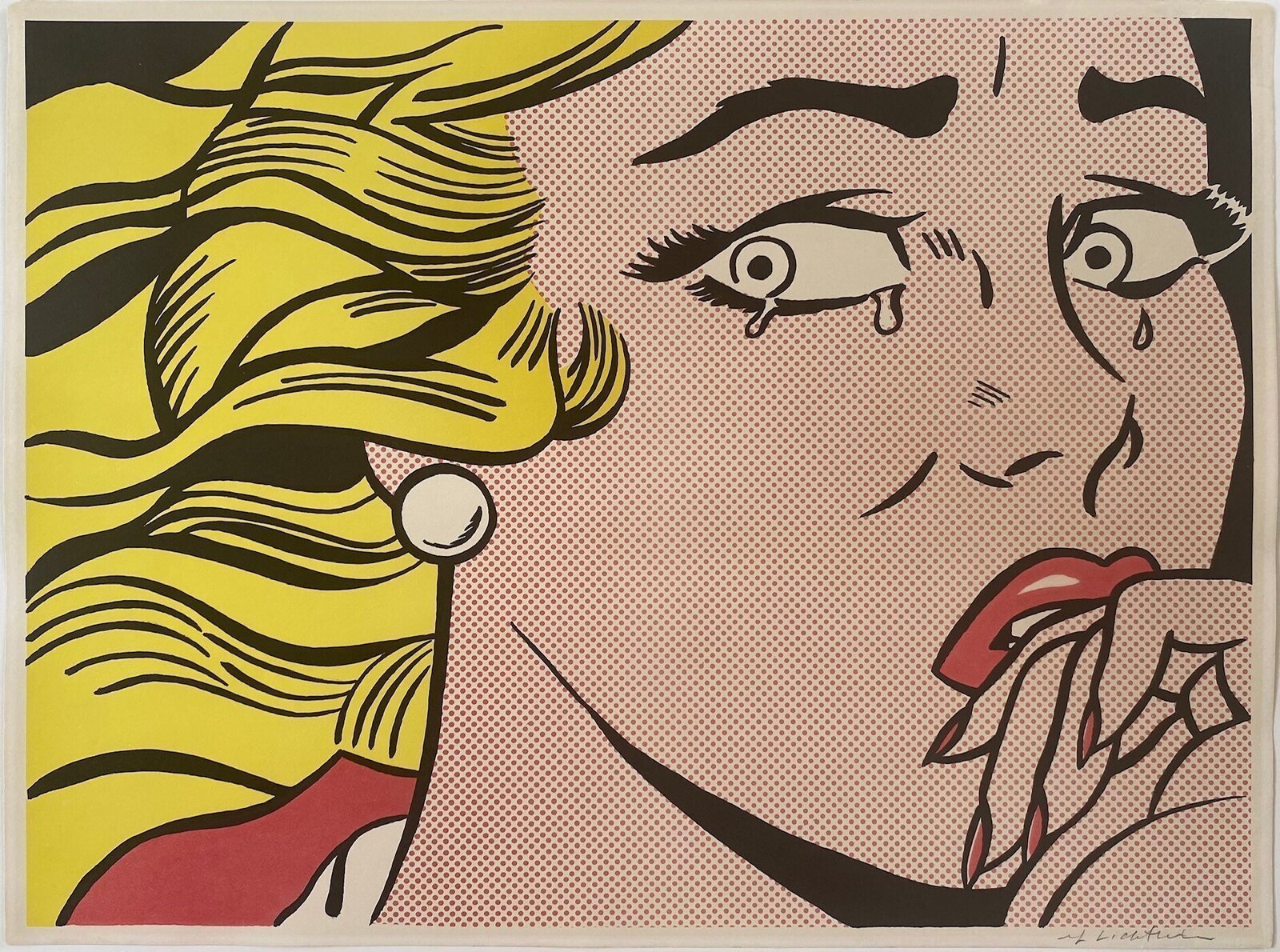
In the early 1960s, Lichtenstein began using images from comic books and advertisements. Later, he included everyday objects, different artistic styles, and references to art history. Richard Hamilton commented on how Lichtenstein treated all subjects the same, saying, “Parthenon, Picasso or Polynesian maiden are reduced to the same kind of cliché.” Lichtenstein’s 1961 painting Girl with Ball was a shift away from his earlier abstract style and the art world’s prevailing tastes. He recalled that commercial art and cartooning were not yet accepted as legitimate art subjects. Lichtenstein carefully copied images by hand, changed the compositions, and used a projector to trace his sketches onto canvas.
Later, Lichtenstein explored the clichés of high art. In paintings like Brushstroke, he made fun of Abstract Expressionism’s unique brush marks by turning big gestures into images that looked commercial and easy to reproduce. He explained, “Visible brushstrokes in a painting convey a sense of grand gesture; but in my hands, the brushstroke becomes a depiction of a grand gesture.”
Lichtenstein continued to find inspiration in art history. In his Cathedral Series and Haystack Series, he reimagined Monet’s subjects using Ben-Day dots, giving Impressionism a more industrial look. In his Artist’s Studio series, he added references to artists like Matisse and even included his own earlier work, starting a habit of quoting himself.
In 1992, Lichtenstein took his style to a new scale with a room-sized painting called Interior with Mobile, which created a space that looked artificial but also real. Throughout his career, he mixed reality with artificiality, high art with popular culture, and hand-made with mechanical methods, showing how these things depend on each other.
Pictures
Request more information about Roy Lichtenstein
EnquireInquiry Roy Lichtenstein
"*" geeft vereiste velden aan
